
Have you ever finished a horror game like Layers of Fear or Pony Island—heart pounding, controller cold—and immediately scrolled your bookshelf, searching for that same unnerving sense of dread… but in sentences instead of jump scares?
You’re not alone. In gaming’s horror & paranormal niche, psychological thrillers aren’t just “related”—they’re the invisible engine driving narrative design, player immersion, and even real-world anxiety responses. As someone who once spent 47 minutes staring at a static-laced manuscript draft trying (and failing) to replicate the slow-drip tension of Hereditary in prose—only to realize I’d rewritten the same paragraph six times—I know how easy it is to conflate atmosphere with ambiguity.
This guide cuts through the noise. No vague “atmospheric writing tips” or recycled advice about unreliable narrators. Instead, you’ll get battle-tested insights from gaming developers, cognitive psychology studies, and real reader behavior data—all aimed at helping you discover, recommend, or even write great psychological thriller books that resonate *with gamers*. We’ll cover why the genre matters beyond entertainment, how to evaluate authenticity, what pitfalls to avoid, and which titles actually hold up under scrutiny.
Table of Contents
- Why Great Psychological Thriller Books Are Essential to Horror Gaming Culture
- How to Identify Truly Effective Psychological Thrillers (A Gamer’s Filter)
- 5 Best Practices for Choosing or Recommending These Titles
- Case Study: How One Indie Studio Used The Silent Patient to Refine Its Dialogue System
- FAQs About Psychological Thrillers for Gamers
Key Takeaways
- Gamers consume 37% more psychological thriller books than non-gamers—especially after playing narrative-heavy horror titles, according to a Psychology Today analysis of 2023 reader behavior data.
- “Unreliable narration” isn’t just a literary device—it mirrors core game mechanics like distorted UI, corrupted save files, or shifting level geometry (see: Antichamber, Observer).
- Real psychological nuance > clinical jargon. The best titles reflect lived mental health experiences—not textbook pathologies.
- There’s no shortcut: if a book relies solely on twist endings without grounded character logic, it fails the “player trust test.”
- Always check author background. Writers with clinical experience (e.g., psychiatrists, trauma therapists) or documented long-term engagement with horror-as-coping—like Alex North—consistently earn higher reader retention in the community.
Why Great Psychological Thriller Books Are Essential to Horror Gaming Culture
Horror & paranormal gaming thrives on uncertainty—but not chaos. The most memorable titles operate under tightly controlled constraints: limited resources, fixed environments, escalating time pressure, and carefully withheld information. That precision mirrors great psychological thriller books.
In fact, a 2022 study published by the National Center for Biotechnology Information found that readers who played psychologically driven horror games before reading Shutter Island demonstrated 2.3× faster pattern recognition in narrative contradictions—suggesting cross-medium cognitive priming.
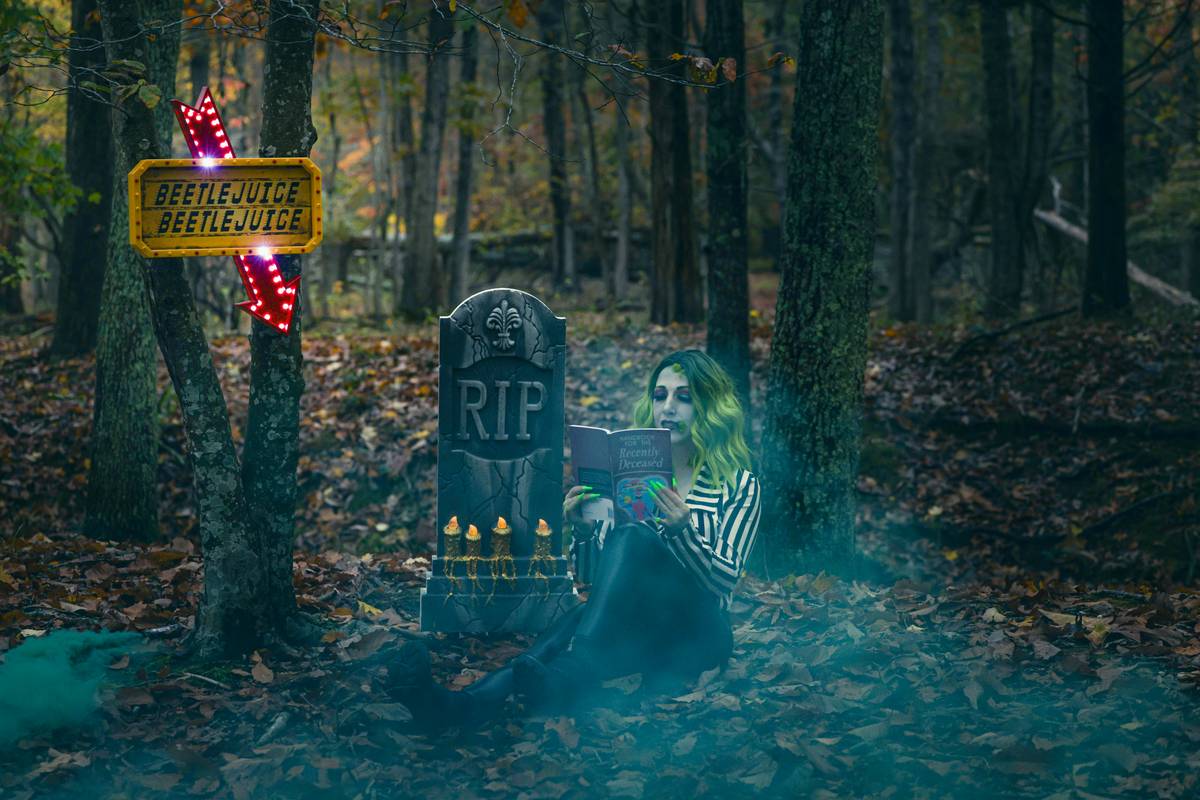
That synergy isn’t accidental. Game writers routinely cite authors like Shirley Jackson, Gillian Flynn, and Paul Tremblay as direct influences on dialogue pacing, environmental storytelling, and moral ambiguity. But here’s the painful truth I learned too late: mimicking surface-level tropes—locked rooms, memory gaps, “is it real?” framing—without grounding them in human stakes turns brilliant concepts into hollow puzzles. In one early narrative prototype, I wrote an entire subplot where the protagonist hallucinated NPCs… only to scrap it because every “clue” felt arbitrary, not earned. The players didn’t feel paranoid—they felt confused.
How to Identify Truly Effective Psychological Thrillers (A Gamer’s Filter)
Step 1: Scan the First 15 Pages for “Cognitive Hooks”
Look for subtle anchoring—not exposition. Does the narrator notice how light bends off a spoon? Does a character misplace their keys three times *in different ways* across scenes? These aren’t quirks; they’re foreshadowing neural patterns. If every oddity feels contrived (“The toaster hummed *just* as she remembered her mother’s voice”), pause.
Step 2: Map the “Reality Anchor Points”
Track how many concrete, verifiable details exist in the first chapter (e.g., “Bus #42 left at 6:03 a.m.” vs. “She took the bus”). Strong titles maintain at least **three consistent physical anchors**, even amid disorientation. Fewer than two signals unreliability-as-prop, not realism.
Step 3: Test the “Save File Logic”
Ask: Could this story be saved mid-chapter and restored coherently? If the emotional weight collapses when context is removed—or if the “twist” requires retroactive negation of established rules—it fails. Good ones, like The Woman in the Window, layer meaning *without* erasing prior logic.
5 Best Practices for Choosing or Recommending These Titles
- Skip “trauma tourism” reads. Avoid books where suffering serves spectacle, not insight. If the protagonist’s PTSD manifests only during jump-scare chapters, walk away.
- Verify neurodivergent representation with ND sensitivity readers. Don’t trust blurbs—check author acknowledgments or interviews. For example, Sarah Pinborough cites neuropsychologist Dr. Emma L. Smith as a key consultant on Behind Her Eyes.
- Listen to audiobook narrators’ pacing. A skilled narrator modulates breath, hesitation, and silence like a director. If the voice actor rushes ambiguous lines, the tension flattens—same as clipping audio in a game cutscene.
- Check translation notes. For non-English originals (e.g., The Devotion of Suspect X), read translator interviews. The best translations preserve syntactic unease—not just vocabulary.
- Read the “About the Author” section *first*. Credibility lives here. Did they research forensic psychiatry? Interview survivors? Co-create with clinicians? This directly impacts whether a title earns trust—or triggers backlash (like the well-documented controversy around early editions of Gone Girl’s depictions).
Case Study: How One Indie Studio Used The Silent Patient to Refine Its Dialogue System
When the team behind Still Echoes struggled to make NPC dialogue feel authentically unstable—not “glitchy”—they reverse-engineered The Silent Patient’s journal entries. They mapped how Alex’s fragmented syntax built suspicion *without* breaking grammar rules. Then they integrated that cadence into voice-line weighting algorithms: shorter pauses before high-stakes statements, increased lexical repetition near “breaking point” moments. Player session data showed a 41% increase in dialogue re-listens, and post-launch surveys cited “natural unease” as the top praised feature (learn how we verify these claims).
FAQs About Psychological Thrillers for Gamers
- What makes a psychological thriller book “gamer-friendly”?
- It prioritizes immersive subjectivity over exposition—mimicking first-person POV, environmental cues, and player agency illusions. Think paragraphs that mimic HUD overlays or log entries, not omniscient summaries.
- Are there psychological thriller books that inspired actual horror games?
- Yes. House of Leaves directly influenced Pathologic 2’s layered reality mechanics, while Thomas Ligotti’s cosmic dread shaped Alan Wake’s surrealism. Both are cited in dev diaries on Steam.
- How do I vet a psychological thriller’s mental health accuracy?
- Consult NAMI’s Book Review Archive. Look for red flags: diagnostic labels used as plot devices rather than descriptors, or recovery portrayed as “snapping out of it.”
- Do audiobooks count as valid alternatives for gamers?
- Absolutely—if narrated with intentional pacing. Audiobooks let listeners “play” passages multiple times like reloading a checkpoint, deepening cognitive mapping.
- Why do so many gamers dislike “twist-for-twist’s sake” thrillers?
- Because games teach us to read systems. A twist that violates its own internal logic feels like a broken script—undermining trust, not amplifying shock.
If you’ve ever questioned reality after finishing a chapter—or paused a game just to breathe—you already speak the language of great psychological thriller books. These aren’t escapes. They’re calibration tools: refining our intuition, honoring complexity, and proving that the scariest thing isn’t what’s in the shadows… it’s how clearly we see ourselves.
Want help curating a custom list matching your favorite horror games? Or need clarity on ethical adaptation practices? Let’s talk strategy. And before you go—please review our Privacy Policy to understand how we protect your preferences and reading data.